

About
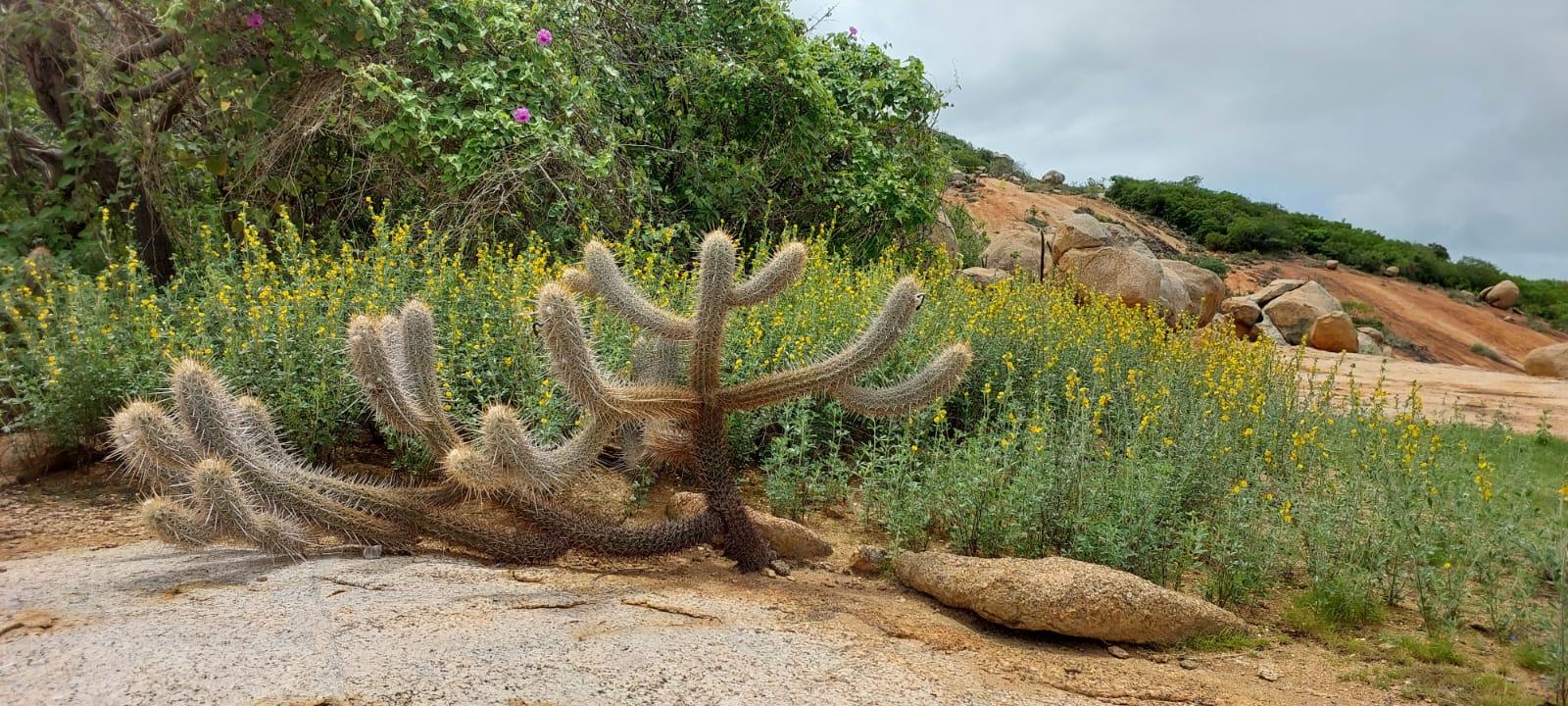
Sertão do Pajeú is located in the state of Pernambuco, in the Northeast region of Brazil. Composed of 17 municipalities, the territory stands out for the strength of family farming and for its rich cultural and tourist vocation. Recognized for the beautiful natural landscapes shaped by the Caatinga — the only exclusively Brazilian biome — Pajeú is also the cradle of a vast intangible cultural heritage, bringing together the largest concentration of poets and cordelistas in the state.
It is in this context that the Pacto Pajeú Sustentável, a territorial initiative of multisectoral articulation that aims to promote sustainable development in the Sertão do Pajeú. The Pact is based on a landscape approach and its main proposal is to unite the efforts of different actors — the public sector, the private sector and civil society — around common goals, guided by the three strategic axes of the Caatinga Roots Program: Produce (https://youtu.be/Rb4Y9RI3BCs), Protect (https://youtu.be/Ae2JEyt89LI) and Include (https://youtu.be/Rb4Y9RI3BCs).
Currently in the consolidation phase, the Pact has an active local governance structure, formed by thematic commissions and spaces for collective deliberation. It acts as a platform for alignment, agreement and monitoring of actions in the territory. Through this structure, it seeks to strengthen sustainable production, conserve the biodiversity of the Caatinga biome, and expand socio-productive inclusion, with special attention to the role of women and young people in local production chains.
The vision of the Pact until 2027 is to consolidate the Sertão do Pajeú as a national reference in the promotion of resilient territories, connecting production and conservation through a sustainable supply model that values the ways of life in the semi-arid region and contributes to the dignified permanence of families in the field. The initiative articulates economic, social and environmental dimensions in synergy with public policies and regional planning instruments
Main production chains worked in the territory:
-
Agroecological cotton
-
Goat
farming -
Poultry
-
Fruit growing
-
Sociobiodiversity products (with emphasis on honey)