
About
General information
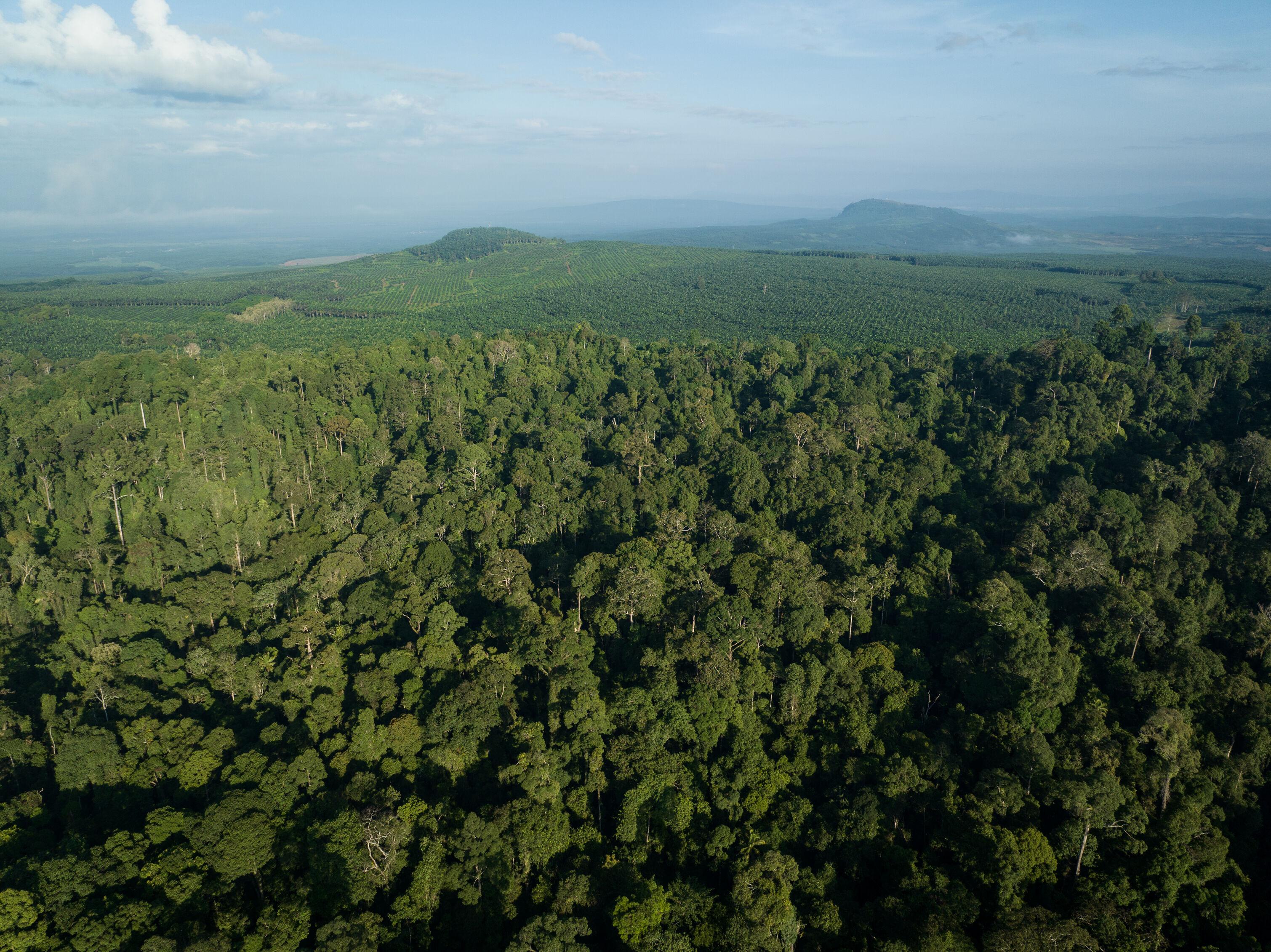
The Tawau-Kunak Landscape (383,109 ha) in southeastern Sabah covers the districts of Tawau and Kunak. It is bordered by Lahad Datu district to the north, the Sulu-Sulawesi Sea to the east, the Celebes Sea, Cowie Bay and the Sabah-North Kalimantan (Indonesia) boundary to the south, and Kalabakan district to the west.
Protect: Habitats―About 30% (115,632 ha) of the Tawau-Kunak landscape comprises totally protected areas (TPAs) in hilly and undulating terrain. At the centre of the landscape is Tawau Hills Park (29,972 ha), home to Mt Magdalena (1,310 m), the highest peak in the area. The park connects with Ulu Kalumpang Forest Reserve (50,000 ha) along its northern boundary, and more tenuously with Mt Wullersdorf and Mt Andrassy Forest Reserves.
Together, these forests form an important component of Sabah’s HCV/HCS network and serve as a critical water catchment area. Seven major rivers originating here supply fresh water to Tawau, Kunak and Semporna districts.
The landscape contains lowland, montane, heath and riverine forests. Most areas have been logged, leaving only a small area of unlogged lowland forest in Tawau Hills Park. While natural regeneration is occurring across much of the landscape, heavily degraded areas such as Sg. Mantri, Sg. Landau and northeastern Ulu Kalumpang continue to require restoration and silviculture interventions, with varying levels of success.
Protect: Species―The landscape is home to rare, threatened and endangered wildlife such as the Bornean elephant, Bornean orangutan, Bornean banteng, Bornean sun bear, Sunda clouded leopard, helmeted hornbill, other primate species, and rich birdlife. These animals are isolated from larger populations in Sabah’s central forests, limiting options for interbreeding and climate-driven migration.
To address this, WWF-Malaysia supported the restoration and maintenance of a 1,067 ha multi-species wildlife corridor linking Ulu Kalumpang with Ulu Segama Forest Reserves through Sabah Softwoods Bhd plantation landscape.
The area is also home to the world’s second tallest tropical tree, a Shorea faguetiana measuring 96.9 m in height.
Produce—About 56% (213.206 ha) of the Tawau-Kunak landscape is dominated by oil palm monoculture, while a further 6% (22,755 ha) comprises commercial tree plantations. The oil palm land holdings range from smallholder farms to large estates spanning several thousand hectares. Sabah Softwoods Berhad, one of the major landholders, manage approximately 60,000 ha, with nearly half planted with oil palm and the remainder with commercial timber species. Sime Darby also maintains substantial holdings in the southwestern and northeastern parts of the landscape.
Restore—In the Tawau-Kunak landscape, degraded forests and fragmented habitats highlight the need for targeted restoration efforts. WWF-Malaysia’s restoration programme supports extensive rehabilitation initiatives in key areas, including 1,086 ha within Sabah Softwoods Berhad and 300 ha habitat restoration site in Mt Wullersdorf Forest Reserve, in collaboration with the Sabah Forestry Department. These efforts aim to strengthen habitat connectivity and establish wildlife corridors between key biodiversity areas.