


About
Langkat Regency in North Sumatra is known for its mangrove forests which play a vital role in the region’s ecosystem – acting as carbon sinks and supporting local livelihoods. Home to parts of the Gunung Leuser National Park, the district is an important habitat for charismatic species including Sumatran orangutans and elephants. The area is also known for its rich natural resources, including tropical forests, rivers, and plantations. However, these forests face challenges from deforestation and illegal logging, impacting their ability to mitigate flooding and maintain biodiversity.
The local economy is primarily driven by agriculture, palm oil plantations, and forestry. In Langkat, the largest type of plantation area is oil palm, spanning 119,434 hectares, covering 19% of the land area. Corporate partnerships have been key to addressing the challenges of deforestation and climate change in Langkat, driven by palm oil expansion.
About NISCOPS
National Initiative for Sustainable and Climate Smart Oil Palm Smallholders (NISCOPS) - a partnership between IDH and Solidaridad - brings together key stakeholders to improve land use, create better incomes and promote inclusive markets.
The landscape project in Langkat is a collaboration between IDH, PT SMART Tbk, Mondelez and Golden-Agri Resources. The project aims to achieve a deforestation-free palm oil supply chain and support sustainable livelihoods. It also faciltates multilevel sustainable palm oil governance in Aceh Province by operationalising landscape deforestation monitoring and implementing social safeguard response protocols in Aceh.
Improving land use
In 2024 Langkat lost 857 ha of natural forest, equivalent to 519 kt of CO₂ emissions. Between 2001 and 2024, forests in Langkat were responsible for a net carbon sink of -774 ktCO₂ each year. The project aims to mitigate deforestation risks and a deforestation-free supply chain.
The landscape features both large-scale oil palm plantations and smaller, independent holdings, with a focus on sustainable practices and innovative uses of palm oil waste. IDH has developed a partnership with Golden Agri-Resources (GAR) and Mondelez for Langkat District (along with Aceh Singkil, Aceh Utara and Aceh Subulussalam) to monitor deforestation, enable smallholder capacity building and facilitate market transformation. This includes work to improve palm oil mills towards No Deforestation, No Development on Peat, No Exploitation (NDPE) commitments.
Creating better incomes and inclusive markets
The productivity of Fresh Fruit Bunches (FFB) in several sub-districts of Langkat remains below the national average. In Bahorok and Kutambaru, for instance, yields are only 4.2 tons/ha/year and 4.03 tons/ha/year, respectively, compared to the average of 18.27 tons/ha/year for smallholders in North Sumatra.
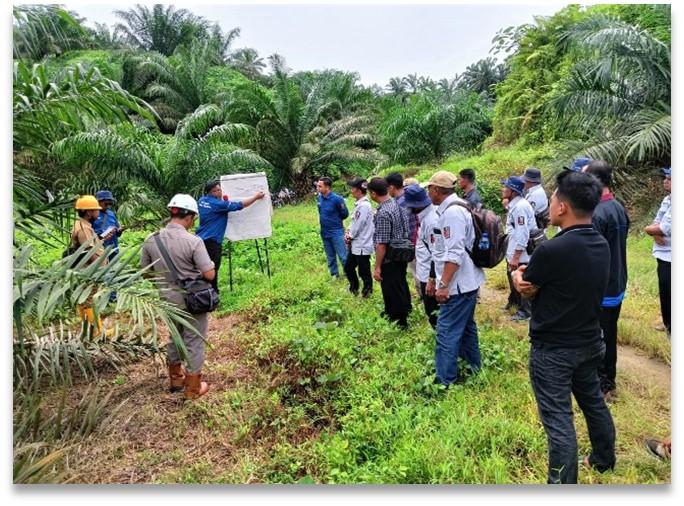
The North Sumatra Landscape Project was a pilot project which supported smallholders across North Sumatra and Aceh to achieve sustainable palm oil production. The initiative strengthened farmers' knowledge on Good Agricultural Practices (GAP), along with support to achieve sustainable certification, such as ISPO and RSPO. To build upon these achievements the Sustainable Palm Oil Landacpe Initatives in Aceh and North Sumatra project was launched in January 2025. Efforts to enhance smallholder capacity and preparedness for sustainable palm oil implementation are continuing through leveraging partnerships with mills, dealers and and agents within GAR's supply chain. There are 39 palm oil mills in Langkat which are integrated into the global supply chain. The proejct serves as a model for an integrated supply chain collaboration where Mondelez, as a buyer from GAR, helps to ensure supply chain sustainability. The project is also providing furher training and capacity building for smallholders and supporting them with land legality.
Support the Langkat District
There are a range of partners – government, NGOs, the private sector and communities – engaged in sustainably developing the Langkat district.
There are many opportunities to support this incredible landscape. Please click on the 'Contact the Initiative' button on the left of this page to get in touch.